
Build a Following on Social Media to Sell T-Shirts
Disclaimer: Our previous post advocated for building a following by setting up an account on every platform, grabbing your brand name, and posting 20 to 30 times a month across all of them. This no longer works.
For a one-person t-shirt brand, that’s how you end up with six half-dead profiles and a burnt-out you.
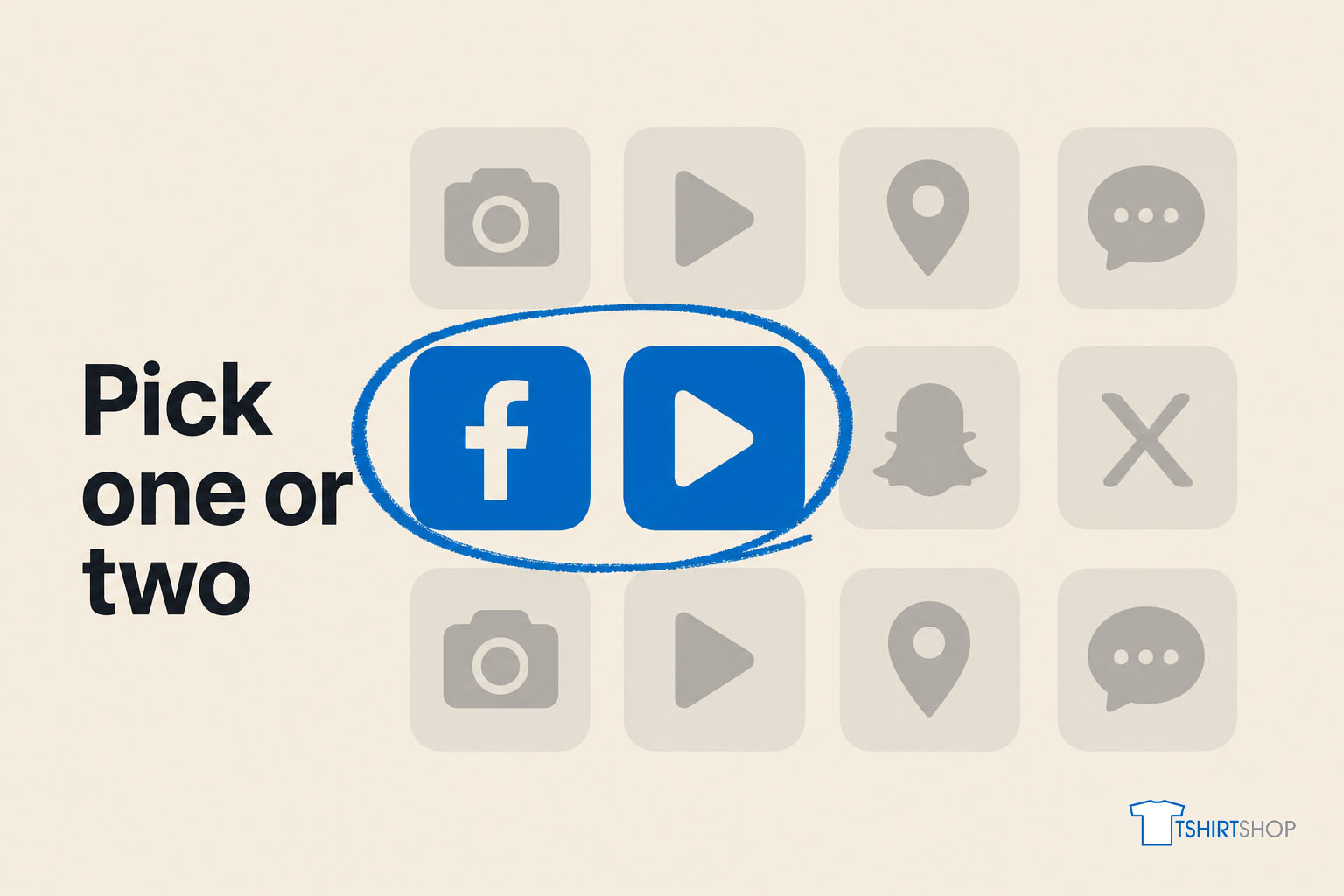
The platforms have grown up since then, and they now do genuinely different jobs. One is where people discover new things. The other is where they check that a brand is legit before they buy.
One will quietly send the most ready-to-buy traffic. Being on all of them, badly, beats being on none, for sure. But being on the right one or two, properly, beats being on all of them every time.
So the real question is not “how do I build a following?” It’s where, and the answer depends on your niche and on what you can actually make.
Here is how each platform stacks up for a tee brand in 2026, and how to pick one.
The Rule That Beats Any Platform Choice
Before the rundown, one thing matters more than which platform you choose. Go where your niche already gathers.
A 4×4 tee brand and a cottagecore tee brand don’t belong on the same platform, because their people don’t hang out in the same place.
Find where yours already are: the group, the hashtag, the kind of video they watch, and start there.
Everything below is about matching the platform to that, not chasing whatever is trending this month.
And whatever you build, the following itself is borrowed. The point of it is to move people toward buying and onto something you own, like an email list.
We covered that whole funnel in turning a following into sales, so this piece remains focused on the choice of platform.
Instagram: The Home Base
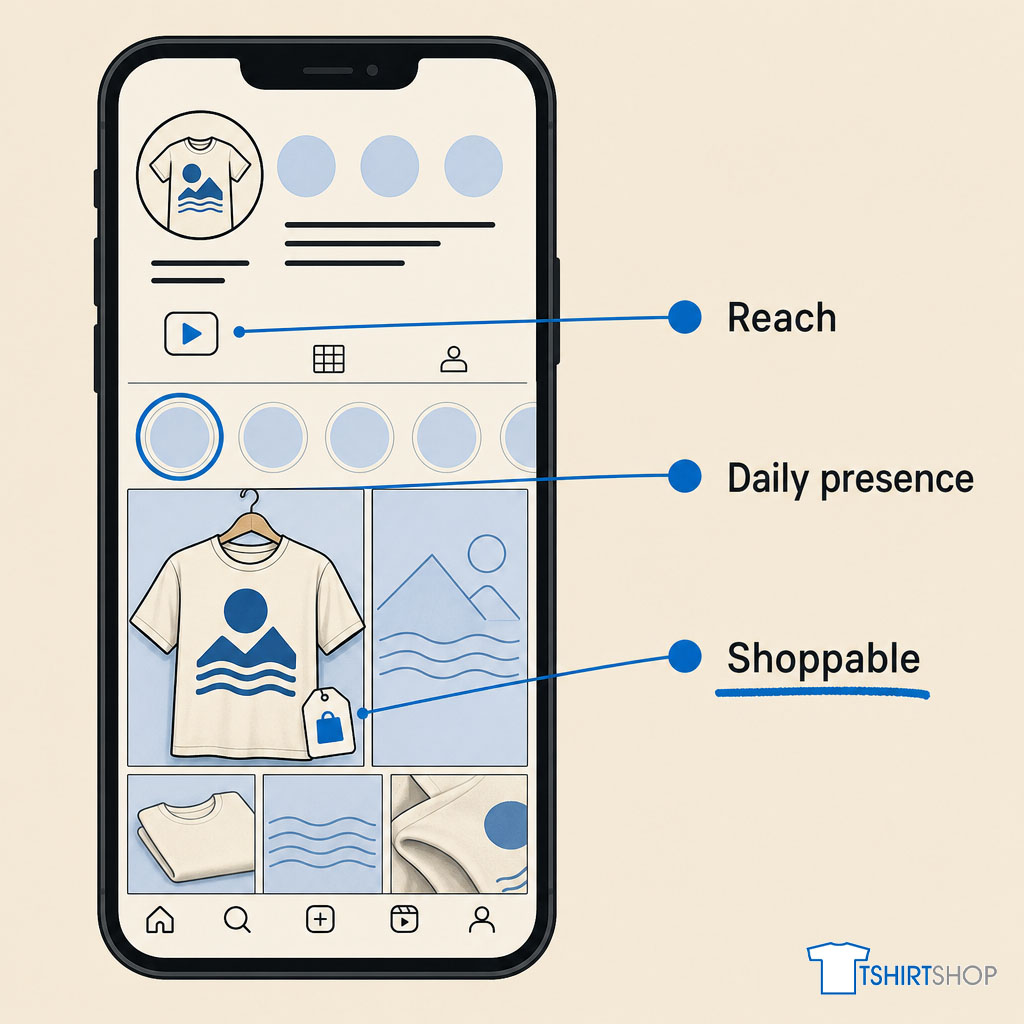
If you only pick one, this is usually it. Instagram has 3 billion monthly users now, and has become the place you go to check that a brand is real before you buy.
They might find you somewhere else, but they will look you up here to decide if you’re legit.
For a tee brand, that’s gold, because your product is visual. The shirt on a real person, shot well, is exactly what this platform rewards.
Reels get you in front of people who haven’t followed you yet, Stories give you the low-key daily presence, and both are shoppable, so you can tag the product straight in the post.
Best for: almost every tee niche.
If you’re not sure where to start, start here. For what actually moves reach on Instagram now, we went deep in our Instagram playbook.
TikTok: The Discovery Engine
TikTok is the biggest change in social since the original version of this article, and it’s right up there.
Nearly 2 billion users, and a recommendation engine that will put a brand-new account in front of thousands of the right people if the video is good.
TikTok Shop is a real sales channel now too, projected to move around $23.4 billion in the US alone in 2026.
The catch is that TikTok runs on original video with a human in it, posted regularly. You cannot coast on product photos here.
But if you or someone in your brand is happy on camera, and your niche skews younger, this is the fastest way to get discovered from a standing start.
Best for: trend-led, funny, or identity-led tees aimed at an under-35 crowd, where you can make regular video.
Pinterest: The Sleeper Nobody Talks About
Everyone underrates Pinterest, and they’re wrong to. It’s smaller than the others at 537 million users, but its traffic buys.
Pinterest’s purchase-intent index runs about 5.6 times the social-platform average, because people come here to plan and shop, not to argue.
A pin also keeps working for months, whereas an Instagram post is dead in two days.
For the right niche, that combination is hard to beat. Aesthetic designs, hobby and interest tees, seasonal and gift shirts all do well, because people actively search for exactly that here.
Pinterest is smaller than the rest, but its traffic actually buys. Purchase intent runs about 5.6 times the social-platform average.
Best for: evergreen, aesthetic, hobby, and gift niches. If your designs are the kind people save for later, this is your quiet winner.
Facebook: Groups And Older Niches
Facebook still has the most raw users of anyone, but the crowd has aged, and organic reach for a business page is dismal. Posting to a Facebook page and hoping is a waste of time in 2026.
The part that still works is Groups. If your niche has an older demographic, think 4×4, motorcycle, fishing, caravanning. They have large, active, genuinely passionate Facebook communities.
Being a real member of those is worth more than any page you could run. Local selling and community still live here in a way they do not elsewhere.
Best for: older niches with strong Group communities, and local or community-based selling.
YouTube: Only If You Can Make Video
YouTube is enormous, and its content lasts longer than anything except Pinterest. But it’s the most work of anything else on this list.
Unless you actually enjoy making video and have something to say beyond “buy my shirt,” it’s not where a small tee brand should begin.
YouTube Shorts is the exception, and it doubles as a home for the TikToks and Reels you are already making.
Best for: brands already making video, or as a spot for Shorts you are producing anyway.
The Ones You Can Skip
X, the platform formerly called Twitter, is a minor channel for selling tees now, worth it only if your niche genuinely lives there.
Snapchat is close to irrelevant for this.
You’re not missing anything by leaving both off your list, and the hours you save go into doing one real platform properly.
Pick Your Channel
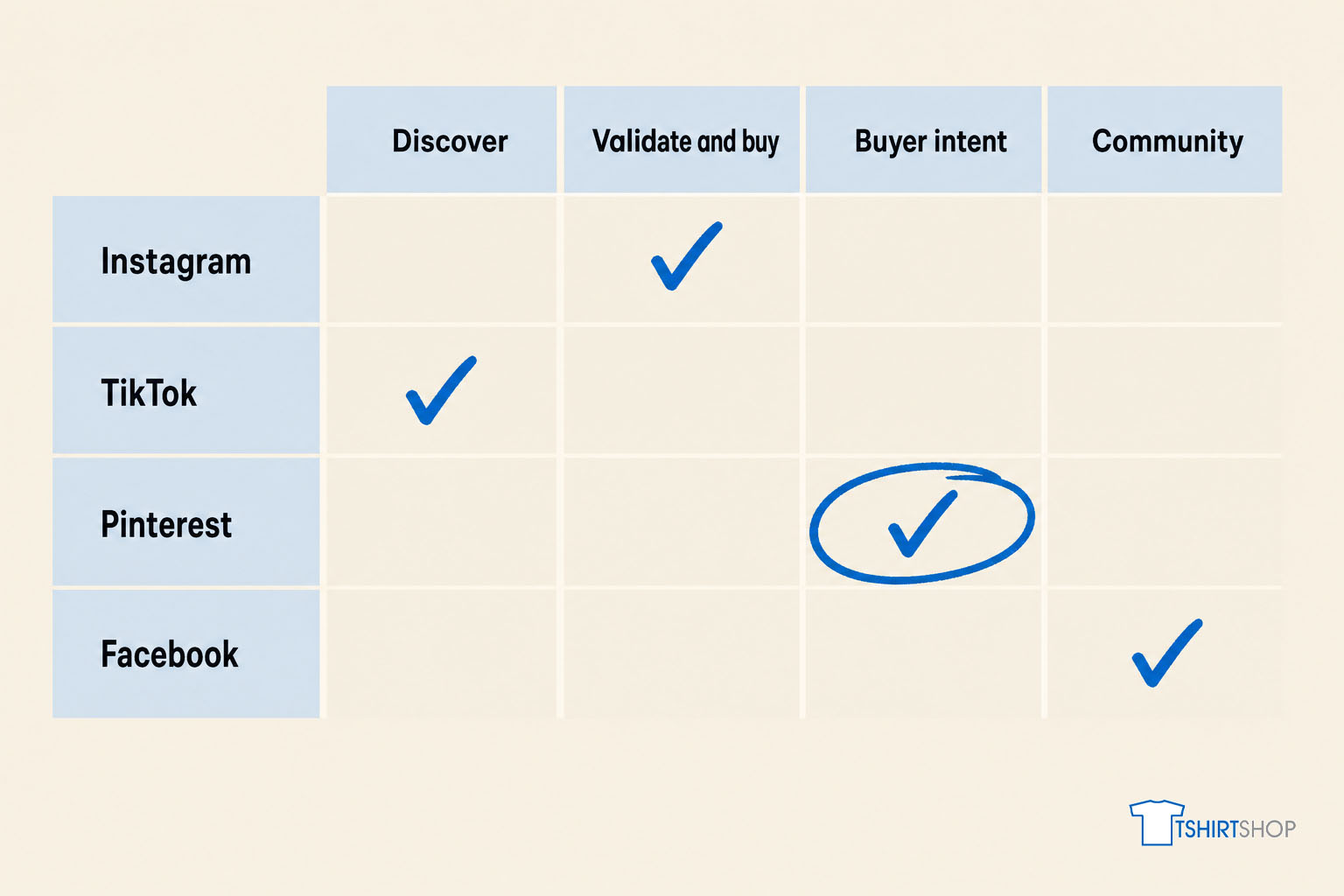
You don’t need to agonise over this. Match the platform to your niche and to what you can make:
- If you can shoot decent photos but not good at video: Instagram, plus Pinterest. But only if your designs are save-worthy.
- If you’re comfortable on camera, and your crowd is young: TikTok first, then cross-post to Reels and Shorts.
- If your niche skews older and community-driven: Facebook Groups, with Instagram as the shopfront.
- If your designs are aesthetic, seasonal, or gift-led: Pinterest, and do not let anyone talk you out of it.
Pick one to start. Add a second only once the first is running on its own. Two platforms done well will always beat five done badly.
In Australia specifically, Instagram and Facebook still hold most of the audience, with TikTok growing fast, so most local tee brands are best off starting with Instagram and adding one of the others based on the list above.
How Much To Post
Forget the old “20 to 30 times a month. Posting daily just because now works against you, because thin filler content gets less reach than fewer, better posts.
Post as often as you can make something genuinely worth posting, and no more. On TikTok, that might be a few real videos a week.
On Pinterest, you can batch a month of pins in an afternoon. On Instagram, a couple of strong posts and some Stories beat a daily scramble.
Consistency matters more than frequency, and quality matters more than both.
Key Summery
The days of being everywhere have stopped. In 2026, the platforms do different jobs.
- Instagram is the home base, and the place people check if you’re legit
- TikTok is the discovery engine if you can make video
- Pinterest quietly sends the most ready-to-buy traffic
- Facebook is really about Groups now
- X and Snapchat you can skip
Pick the one or two that fit your niche and the content you can actually produce. Post when you have something worth posting.
Once people are following you, give them somewhere to buy. Register as a vendor, list your designs, and send your new audience straight to a page where they can actually get the shirt.