
How to Grow an Online Following That Actually Sells
Here’s the uncomfortable truth about growing an online following. The followers aren’t yours, and you’re building on rented land where the landlord keeps raising the rent.
The landlord is the algorithm, and in 2026 it rarely gives you anything for free.
About three-quarters of our vendors say their organic reach is still falling year on year. And the typical post goes nowhere, reaching only 2 to 10% of the people who already follow you.
It gets worse for Facebook business pages that now sit near the bottom half of that range.
So you can grind for a year, hit 10,000 followers, post something great, and a few hundred people see it.
None of that makes social media a waste of time for a t-shirt brand. It makes the follower count the wrong thing to aim for.
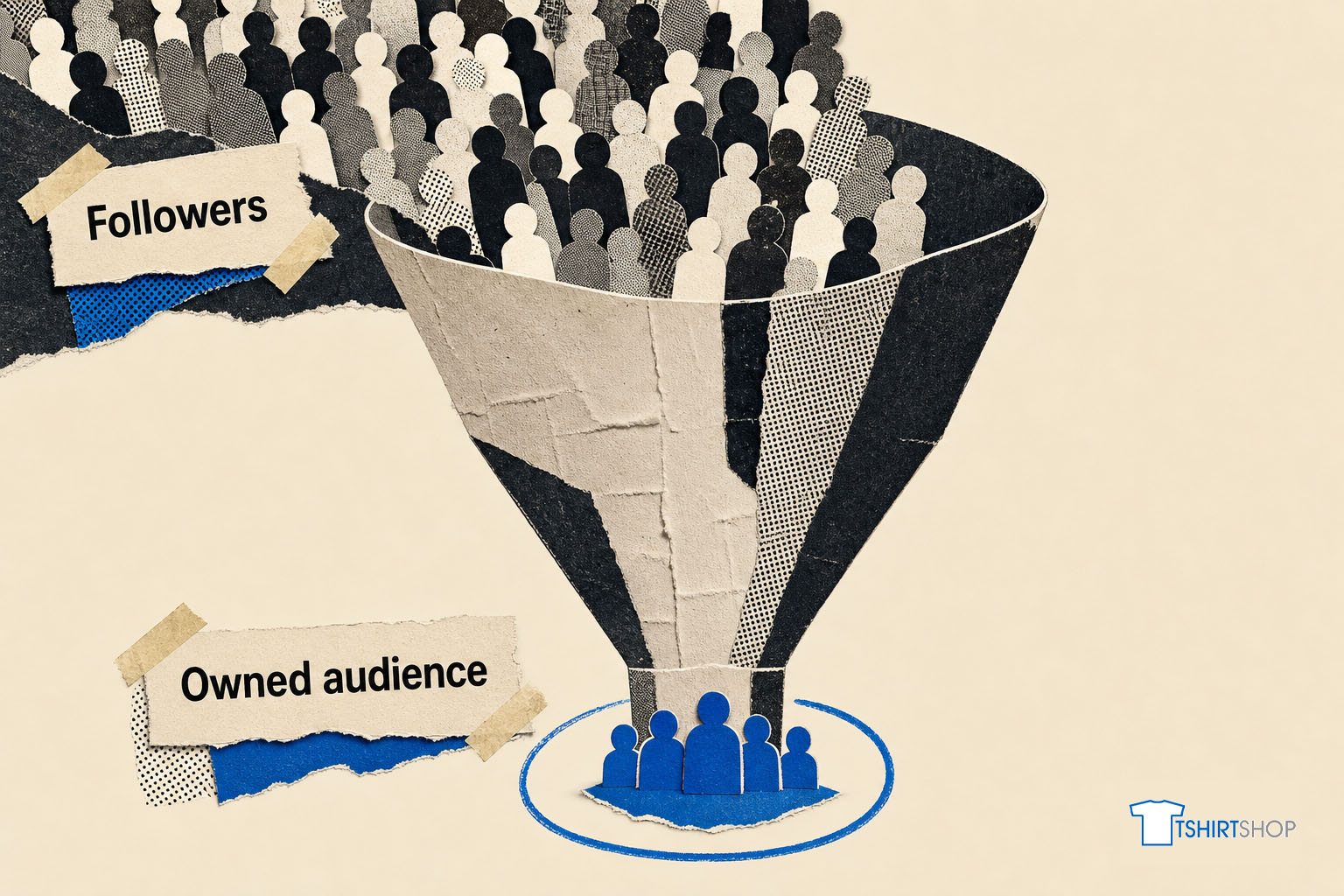
The number worth considering is how many of those people you can move off the platform and onto something you own.
That’s the whole game, and it’s the bit the online advice never mentions.
Your Following Is Rented. Your List Is Owned.
Think about what you actually control on each platform.
- Your follower count? The platform can change what it does with that overnight, and it has, plenty of times.
- Your reach? Throttled unless you pay.
- The account itself? One policy update or a wrongful ban away from gone, with every follower attached to it.
Now think about an email list. You reach close to 100 per cent of it whenever you like. Nobody throttles it. If a platform vanishes tomorrow, the list still opens tomorrow.
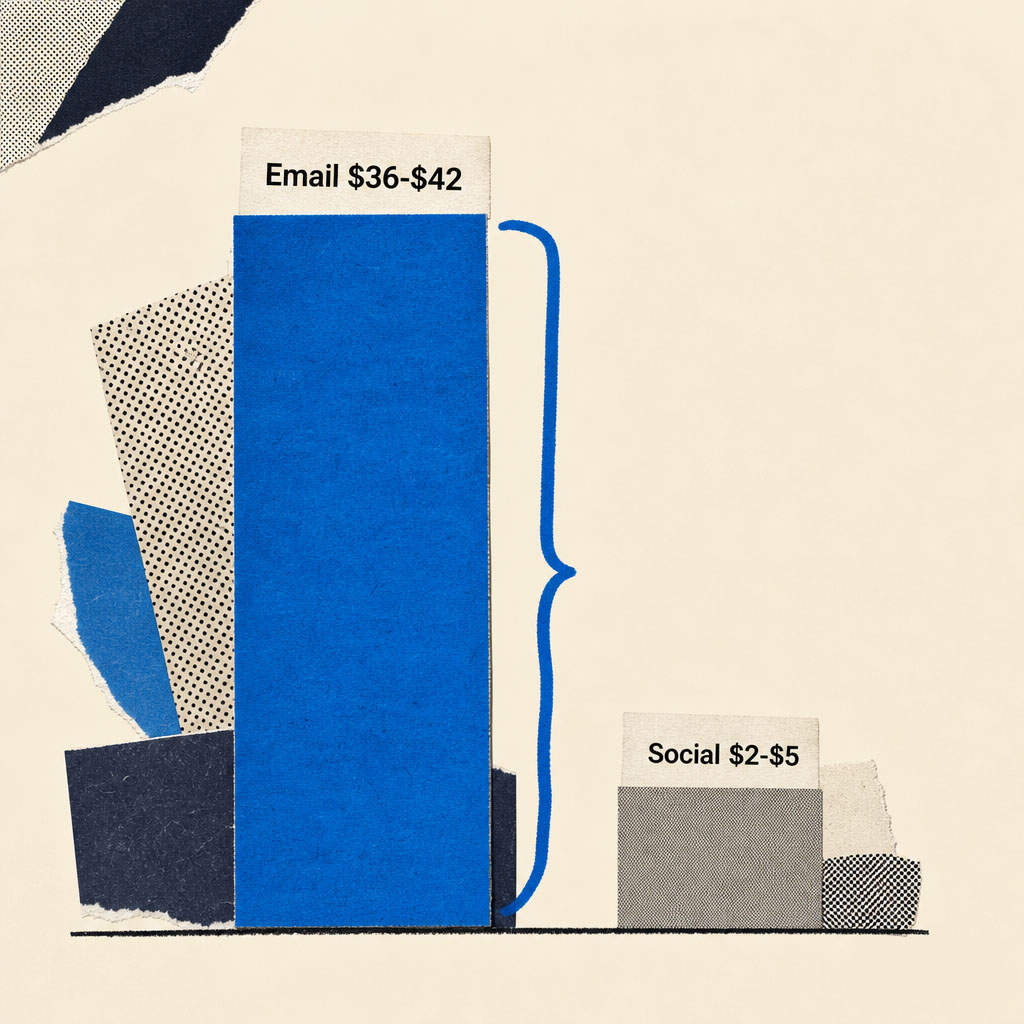
There is a big gap between what each earns. Email returns about $36 to $42 for every dollar spent, compared to roughly $2 to $5 for your organic social.
OK, let’s be real here: I’m not saying social media is the enemy. Think about it like this. Social is the shopfront, and your email list is the actual shop. It’s the only audience a platform can’t take from you.
So here’s the frame for everything below. Social media exists to find the right strangers.
Your job is to turn those strangers into followers, then turn the followers into an audience you own, an email subscriber or a customer.
The brands winning aren’t picking one or the other. They use social to build the audience that email then owns and sells to.
Pick One Platform And Go Narrow
The typical advice is to “start small” and mix up your content. Half right. The real move now is to go narrow before you go big.
Every platform decides who sees a post based on the post itself, not on who follows you. That’s good news for a small account.
A brand-new post can reach thousands of the right people, but only if the platform can tell exactly who those people are.
It can only tell if your account is specific. A page that posts a 4×4 tee, then a motivational quote, then a cycling design, then a meme tells the algorithm nothing.
A page that is unmistakably about one niche gets put in front of that niche.
So pick one platform, the one where your people actually hang out, and one niche, and go deep. You’re not trying to be everywhere.
You’re trying to be the obvious account for one specific group. Spreading three posts a week across four platforms is exactly how accounts get abandoned.
Give Value That Shows The Product
Value is not posting daily to tick a box. Daily volume works against you now.
Original content gets far more distribution than filler, and accounts that flood the feed with low-effort reposts get quietly dropped from recommendations. Fewer and better beats more.
The highest-value content for a tee brand is usually the simplest thing you can make: the shirt on a real person, worn where it belongs, shot so the design reads at thumbnail size.
A gamer design on someone sitting at their gaming rig. A 4×4 tee on someone at the trailhead. That’s not an ad. It’s the product doing the talking, and it shows a stranger in that niche exactly what they would look like wearing it.
Throw in the odd bit of process too: a print run, a packing shot, a design half-finished, so people can see there is a real operation behind the account.
Engage Where Your Niche Already Is
Go where the conversations in your niche already happen: the groups, the hashtags, the comments under bigger accounts in your space, and actually participate in those conversations.
Not as a reciprocal-follow machine, not as the person dropping “nice post” on everything. Add something. Answer the question. Say the thing.
People follow accounts that obviously belong to their world, and belonging is something you show, not something you announce.
When someone mentions your brand or wears your shirt, show up properly. Reply, ask how they are finding it, repost them with a tag.
That is worth more than a hundred cold follows, because it’s public proof that a real person likes your stuff.
Make The Ask That Turns Rented Into Owned
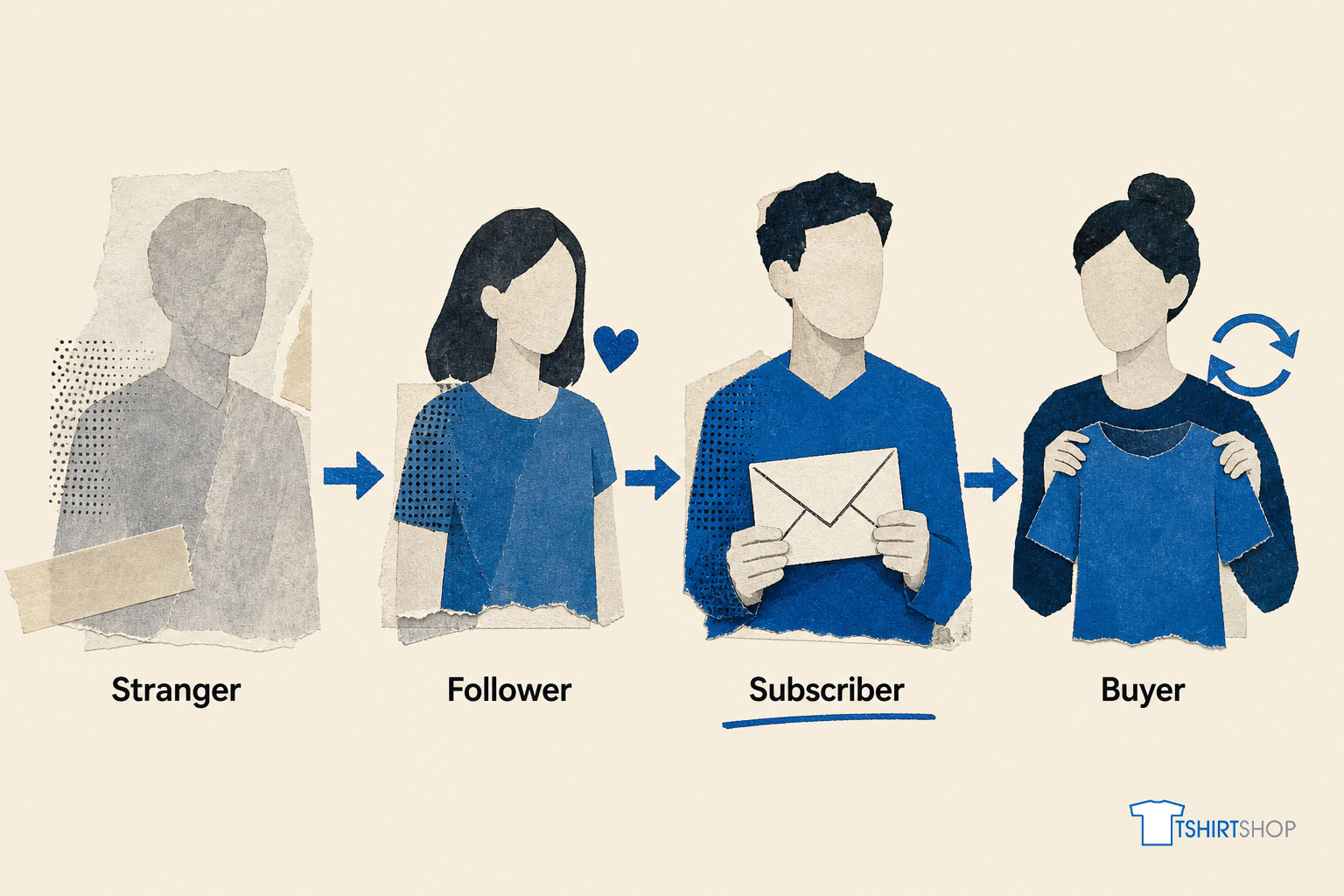
This is the most important section because it’s the one that pays. Now you have the follower; the next move is simple.
Give them a reason to hand over an email address or make a first purchase. Here are a few tactics that work for a t-shirt brand:
- A design-drop list. New designs go to the list first, before they hit the feed. People in a niche genuinely want first dibs on the shirt made for them.
- A first-order discount for signing up. Small, but it turns a follow into an email, and often a sale in the same move.
- A vote. Let the list pick which design gets printed next. Now they are invested, and they are on a channel you control.
Every one of these takes someone from a number you rent to a relationship you own. That’s the conversion the whole following was for.
If you sell your designs through a marketplace that handles printing and shipping, this is also where you point people to make a purchase.
You can list your work and start earning without holding any stock by registering as a vendor, and send your growing audience straight to your designer page.
Then You Can Sell Again Without Paying The Rent
Here’s the payoff of owning the audience instead of renting it. Once someone is on your list or has bought once, you can reach them again for next to nothing.
No algorithm in the way, no reach to buy back. A new design drops, you email the list, and the people most likely to want it see it, every single time.
That is how a following turns into a business rather than a vanity metric. The follower count grows the top of the funnel. The owned audience is where the repeat sales live.
A store with 2,000 engaged email subscribers in a tight niche will out-earn one with 50,000 passive followers, every day of the week.
If you’re still sorting out the basics of selling your designs, our guide on how to become a t-shirt designer walks through the first steps.
And if Instagram is your main channel, our Instagram playbook covers what actually moves reach there now.
The Key Takeaways
Stop measuring the wrong thing. A following is rented reach on land you do not control; organic reach keeps shrinking, and the number alone is worth a little less every year.
Use social for the thing it’s still brilliant at: finding the right strangers in a specific niche. Then convert them.
Pick one platform, go narrow, post content that shows the product to people who would wear it, take part in the niche properly, and make a clear ask that turns a follower into an email subscriber or a customer.
That owned audience is the asset. The following is just how you feed it.
Ready to turn attention into sales? Register as a vendor, list your designs, and start sending your audience somewhere they can actually buy.
Resources For T-Shirt Designers
- Design a t-shirt online as a sample
- Bulk T-Shirt Printing Company
- Get Rough Sketches Redrawn Professionally
- Free T-Shirt Store – Free listing – earn commission
- Drop Shipping T-Shirts – Connect your store
- Build a Website for Selling T-Shirts On
- Buy a Ready-made Drop Shipping Website
- Get help Marketing and Advertising your product
- Learn about T-Shirt Printing Machines
Related Posts